Motor Neurone Disease Care
At our support network, we understand the challenges of motor neurone disease and are here to provide compassionate care.
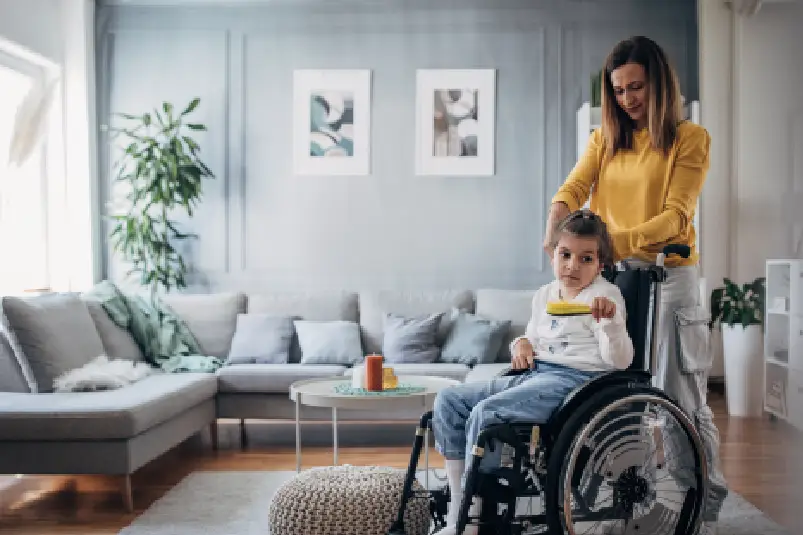
Motor Neurone Disease Care in Australia: Real Support for Real People
Motor Neurone Disease (MND) alters everything—mobility, independence, communication, and the most mundane elements of everyday life seem to hang in the balance. It’s a progressively degenerative, unpredictable disease, and while there’s no cure, there is something that can make all the difference: the right support, provided the right way, by the right people.
Care on its own often falls short — at Support Network, we provide a lifeline: a structured but flexible support system, and a deeply thoughtful approach that respects the process that everyone has to go through individually. Since MND is not a one-size-fits-all condition, neither is the care it entails.
The Reality of Living with MND — And Why Personalised Care Matters
Motor Neurone Disease does not let up. It robs people of muscle control, movement, speech, swallowing, and eventually, breathing—but it must never rob people of dignity, comfort, and a quality of life.
So many people with MND find it difficult to access the right care, as general homecare isn’t designed for managing complex progressive neurological disease. Families can be especially lost, unsure how to navigate these fast-switching changes, and burned out from trying to do it all themselves.
And that’s the reason why our approach is different. That is not some one-size-fits-all algorithm: every piece of care we provide is customized for real, evolving needs.
More than the Basic Care — Specialist MND Support That Really Matters
Aged care or general disability care is not Motor Neurone Disease care. It takes a team who understand the progression and complications of the condition, and the individual medical and emotional needs of those living with it.
- Specialized Care Teams – Our new professionals are trained in neuromuscular deterioration, respiratory care, and non-verbal aspects of communication.
- Advanced Equipment & Assistive Technology – Non-invasive ventilation, communication devices, hoists, adjustable beds, mobility devices, etc.
- Funding Assistance/NDIS – MND care isn’t cheap. Navigating NDIS plans, government funding and financial support options so that you receive every available resource.
We have a multi-disciplinary approach—partnering with neurologists, speech pathologists, physiotherapists, and palliative care specialists—because true care involves more than just daily tasks.
Beyond Basic Care—Specialist MND Support That Truly Makes a Difference
Motor Neurone Disease doesn’t progress at a steady rate. It does not have a tidy progression or wait around for someone to catch up to it. It takes over, frequently more quickly than anticipated, and leaves people, individuals and families, trying to catch up. The challenge is not solely physical — it’s also about the uncertainty. What you do today may not even be doable tomorrow. That’s why MND care can be no standard service — it can’t be something that you put in a box, but an evolving, adaptable support network that gets the reality of the disease.
We understand the disease for what it is — a disease that call for a clinical but also humane, medical but also intimate response. We don’t just help; we anticipate, plan and walk alongside families through each transition, every loss, every new difficulty.
More Than Just Care—A Dynamic Approach That Moves With You
Advances in care address multiple needs in the lives of people with MND but each phase of the journey brings new realities and most providers are reactive, responding with tailored assistance only once the demands have become significant. We do things differently. Our time is spent in preparing by anticipating, so that adequate support, technology, and medical intervention are seamless in place well before the disease dictates such an outcome through a crisis. We shape care around what might come next, not just what’s happening in the moment.
At first, there is strength, independence and determination. Muscles may lose strength, but they can still move. Speech may slow down, but communication is still able to be conveyed. Keeping as much function for as long as possible is the aim — mobility aids, strategies to conserve energy and assistive tools that promote independence. We support them in a subtle way, that only improves—not takes over.
With the disease advancing, movement begins to vanish, speech becomes labored, swallowing might become difficult. The time when a crisis strikes is not when we spring into action. This is where advanced care planning is so important when we start introducing things like nonvasive ventilation, speech generating devices, mobility hoists, 24/7 hands-on care, to keep them safe and comfortable.
In the later stages, care should make that shift from support for function to management for the whole body.” The respiratory system fails, and even basic tasks grow impossible. This is the time comfort comes first. We provide pain management, gentle repositioning, airway management, and end of life palliative care that prioritizes dignity, comfort and peace of mind for the patient and their family.
First steps to accessing the right care, support & funding for MND in Australia
The NDIS, My Aged Care, Carer Allowance, Disability Support Pension — these are not merely government programs. They are lifelines. But for too many families, they become another burden to bear, ensnared in complicated application processes and eligibility requirements that make it hard to access the treatment and financial support they deserve.
We make it simple.
- NDIS (National Disability Insurance Scheme) – For those under 65, NDIS funding allows you access to home modifications, assistive technology, mobility aids, 24/7 personal care and support coordination. We take care of the administration, making sure your plan includes what you really need, and push for more funding when MND advances.
- My Aged Care (MAC) & Home Care Packages – for people over 65, the system is different but the aim is the same: getting the right support at the right time. We manage your Home Care Package effectively so that you get the palliative care, home, and equipment assistance you need, without any delays.
- Carer Payments & Disability Support Pension – No family member ever taking on the role of carer for a loved one should have to trade-off the right of care against the right to financial securities. Our work includes carer allowance applications, respite funding, and income support options, so that carers are there for loved ones—without a financial burden.
Getting the Right Level of Care—Before You Need It
MND doesn’t wait. You shouldn’t have to either. One of the most common mistakes families make is to delay applying for increased services for care, often because they do not realize how rapidly M.N.D. can develop — or because they do not know what is out there.
We work differently.
From the initial conversation, we plot out a care pathway so you’re never uncovered. We don’t merely review what you need today—we prepare for what comes next, and we implement the right services even before you need them.
- Early-Stage Support – Assistance for you to stay independent with light personal care, meal prep, and mobility-friendly changes.
- Mid-Stage Intervention – Appointing physiotherapists, speech pathologists, respiratory specialists, and personal carers to help with more complicated symptoms.
- Advanced-Stage & Palliative Care – Specialized live-in care, advanced airway management, and 24/7 care to promote life-facilitative actions delivered in dignity.
Breaking Through the System—Because You Deserve More Than Just Standard Care
MND is not an illness that fits within the neat little boxes of government guidelines. It’s a disease that is progressive and requires an ever-evolving, highly responsive care plan.” Unfortunately, it’s not set up to walk at MND pace, and so many families are left to try and battle for an increase in funding once it’s well past deadline.
We don’t simply walk you through the system—we advocate for what you’re entitled to.
- We make sure you maximize your NDIS funding resourcefully — underfunded plans or missed-out services don’t happen here.
- We advocate for reassessments as your needs change, since what was the right support six months ago may not be sufficient.
- We eliminate waiting lists, delays and unnecessary assessments — so vital care is not delayed by forms.
You don’t have time to hold out, and you shouldn’t have to.
How Our MND Care Workers Assist with Daily Life—From Mobility to Mental Health
Our highly trained, fully certified MND care workers at Support Network do much more than help provide you with assistance; we offer stability, dignity and a genuine sense of companionship. We don’t subscribe to a one-size-fits-all, rigid care model. Instead, we tailor all aspects of our support to the reality of an individual’s condition — as MND care is not about what we can do for you, it’s about how you can still live life your way.
Abyssal Precision Care with Industry-leading Credentials
MND isn’t a typical chronic illness. It needs a specialised, skilled workforce — someone who understands neuromuscular deterioration, airway management and progressive mobility loss. Which is why we guarantee every care worker we hire is not only qualified — but trained in MND specific care.
All of our MND care professionals are certified with qualifications recognised within the Australian healthcare industry:
- Certificate III & IV in Individual Support (Ageing & Disability)
- Neurological Care Training
- Palliative & Complex Needs Training
- Certification for Manual Handling & Mobilization Assistance
- Education on Non-Invasive Ventilation & Respiratory Support
- Accreditation for Speech & Swallowing Assistance
- For Overlapping Conditions: Dementia & Cognitive Decline Awareness
- Approved by NDIS & Fully Compliant
We don’t employ all-rounder carers. We hire MND-trained staff who know the condition inside and out — the unpredictability, the challenges and the quality of care that makes a difference.
Helping with Daily Living—More Than Just Physical Assistance
MND might diminish strength, but it must never rob anyone of dignity. As care workers, our role is not only about lifting, moving or supporting but about creating a world where every person we support is human, respected and in control.
Mobility & Physical Support
- Helping with safe transfers / positioning / fall prevention to avoid pressure sores and muscle strain.
- Doing gentle range-of-motion exercises to prevent stiffness and promote circulation.
- Using adaptive devices such as ceiling hoists, powered wheelchairs, and transfer boards.
- Assistance with personal hygiene, dressing and grooming focusing on comfort and independence.
Medical & Clinical Assistance
- Respiratory issues & non-invasive ventilation support, keeping breathing as simple as can be.
- Coordination for speech & swallowing therapyTherapeutic interventions for meal adjustments, feeding techniques
- Support for PEG feeding of those unable to swallow safely.
- Medication Management, including reminders and assistance with administration, with collaboration with GPs and specialists.
Emotional Support & Companionship
MND isolates. As speech slows, and mobility falters, social interaction often loses steam. Our care workers are more than helpers — they’re trusted companions.
- Augmentative and Alternative Communication (AAC) uses speech apps, eye-tracking technology, and adaptive devices to support non-verbal communication.
- Having deep conversations, reading aloud, or just being there when words aren’t necessary.
- Help your clients socialize, stimulate communication with family, friends and community groups.
Finding Strength in Community: Local Motor Neurone Disease Support Groups in Australia
And in Australia, there are organizations specifically set up for MND patients and their families — communities of people who know exactly what you’re experiencing. These groups are more than about information; they offer emotional reassurance, advocacy, practical resources and the feeling that MND is not a condition you battle alone.
We match people and families to customized networks of support based on location, phase of illness, and unique needs.
MND Australia: The National Backbone of Support
MND Australia is the nation’s peak body advocating, educating and funding research into treatments and cures. But it’s not enough just to advocate for better science — they help patients and families get real-time help now.
Access to individuals via their network of state-based MND associations:
- Peer support programs — that way you can talk to people who actually get it.
- Workshops and educational sessions—to guide families through care, equipment details and progression.
- Allied health links — access to physiotherapists, speech therapists, respiratory specialists and palliative care teams.
- Assistance with legal and financial planning – helping individuals prepare for the future by creating wills and power of attorney and applying for NDIS.
State-Based MND Associations: Local, Hands-On Support
In Australia, each of the states has separate MND organisations that offer local services, aid in fund requests, and set up support services. These aren’t call centres or online resources — they are real teams, helping in the real world and real communities.
- MND NSW – Offers equipment loans, regional outreach, and carer support programs.
- MND Victoria — Respite care funding, advocacy and training for healthcare workers
- MND Queensland – Provides financial assistance, therapy referrals, and support for rural communities.
- MND South Australia & Northern Territory – Provides counselling services and emotional support to families adjusting to the impact of MND;
- MND WA – Assists with download. home adaptations, accessibility, and end-of-life care coordination.
Each association is dedicated to supporting individuals with MND to receive the care, support, and community they deserve.
Practical Help for Families: Supporting Loved Ones with MND the Right Way
Caring for a person with Motor Neurone Disease (MND) is more than just physical support—it's an emotional, mental and physical investment that changes life for everyone involved. Families assume roles they never dreamed they would when someone they love is stricken with a terrible, progressive disease — nurse, advocate, therapist, emotional anchor — even as they struggle to endure the stress of the disease itself. It’s exhausting. It’s overwhelming. And sometimes, that feels impossible.
But here’s what families should know: you’re not meant to go through this alone.
Here at Support Network we don’t only care about the patient we care about everyone affected by MND. Because loving and supporting someone the right way doesn’t mean muscling through exhaustion, prioritizing their needs above your own or shouldering the burden of this disease alone. It means knowing when you need help, when you need to step back and what professional support to pull in — so you can be a loved one first, and a carer second.
The Reality of Family Caregiving—And Why Burnout is Inevitable Without Support
Families want to be there for their loved one, but MND is not a condition that just takes — it demands. The gradual loss of movement, speech, swallowing and eventually breathing demands continual adjustments, new medical interventions and around-the-clock vigilance.
Most family caregivers are unaware of their burnout until they’re already burnt.
- You convince yourself, “I can do this,” until exhaustion literally sickens you.
- You tell yourself, “I just have to try harder, ” until the effect of the toll makes you numb.
- You keep going, “because they need me,” until the stress of it turns into resentment, guilt, and a total loss of self.
Caring for someone living with MND doesn’t have to involve losing yourself in the process. If you’re exhausted, isolated or stretched too thin, it’s time to rethink how care is structured — before it breaks you.
The Signs These Strategies Aren’t Working
There is no right time for a family to bring in professional care — it’s unique to each experience. But there are unmistakable signals that caregiving isn’t sustainable without outside assistance:
- When the physical care is too much — lifting, turning people, assisting with mobility needs.
- When eating and swallowing challenges worsen, and meal prep gets complicated.
- When ventilation and breathing support need medical expertise that exceeds what a family can provide.
- The point at which lines of communication become strained, and frustration builds on both sides.
- When family members are mentally, emotionally, or physically struggling from the demands of care.
MND needs a multidisciplinary approach. Families should not have to do it all by themselves—not when trained, certified professionals are there to step in, help carry the load and ensure the best quality of care.
At Support Network, we help families find care plans that reflect their realities. Some require part-time respite care to rest. Some require live-in care workers to navigate late-stage support. Whatever it takes, we work to set up care in a way that allows families to be present — without being overwhelmed by the burden of MND.
Preventing Burnout: How Families Can Protect Each Other
MND will affect people’s lives in many ways. But being there for someone you love doesn’t require sacrificing your own well-being. And there are actionable ways to ensure that caregiving doesn’t affect your own health, because there will be sacrifices on the family side, as much as there will be on the patient’s side.
Book Respite Care — Before You Need It In A Panic
Families are reluctant to take breaks, feeling guilty about closing the books. But respite care is not abandoning your loved one — it’s ensuring you have the strength and ability to continue being there for them. Whether it’s a few hours a day or overnight support, planned respite is a way to avoid total exhaustion.
Establish a Care Team — Because Caring for MND Is a Team Effort
Care should not be borne by one person. We help families create a strong care team including professional carers, nurses, therapists, and social workers, so that the responsibility is shared, and no one person has to bear all the emotional and physical load.
Seek Emotional Support — Because Caregivers Need It, Too
It is emotionally devastating to watch the person you love lose their independence. You don’t need to deal with it by yourself. We link families with counselling, MND-specific support groups and mental health resources — so that caregivers have an outlet to grieve, to vent, and to heal.
Prepare in Advance — Because MND Progresses More Rapidly Than Many Anticipate
Families’ single biggest mistake is waiting until crisis strikes to make decisions about care. We work with families on early long-term planning, legal documents, NDIS funding and palliative care discussions — before emergencies arise. Having one helps to make certain that when the disease advances, families don’t find themselves racing to figure out a solution.
Call today, and let’s make sure your loved one gets the care they deserve—without you losing yourself in the process.
Get the Support You Deserve – Call Us Today
At our support network, we understand the challenges of motor neurone disease and are here to provide compassionate care. Our multidisciplinary team—including occupational therapists, language therapists, and healthcare professionals—works closely with you to manage symptoms of motor neurone, from muscle weakness, muscle stiffness, muscle wasting, and muscle cramps to issues like slurred speech, emotional lability, and frontotemporal dementia.
With access to specialized palliative care services, our palliative care team supports those experiencing respiratory failure, spinal cord deterioration, and loss of functions. We assist in navigating the diagnosis of motor neurone disease, offering resources for genetic testing, blood tests, and symptom management. Our healthcare team and social care professionals provide tailored care, ensuring a person-to-person approach that includes support for day activities and essential treatments like botulinum toxin injections.
No matter where you are in your journey, we are here for you. Reach out to our health care professionals and social care services today at 1300 671 931—because no one should face this alone.
Support services for various conditions
- Arthritis Care
- Autism Care
- Cancer Care
- Diabetes Care
- Epilepsy Care
- Huntington’s Disease Care
- Muscular Dystrophy Care
- Multiple Sclerosis Care
- Out of Hospital Care
- Parkinson’s Disease Care
- Palliative Care
- Stroke Care
- Spinal Injuries Care
- Visual Impairment Care
Let’s figure it out together
No pressure. No confusion. Just clear, kind guidance — one step at a time.